
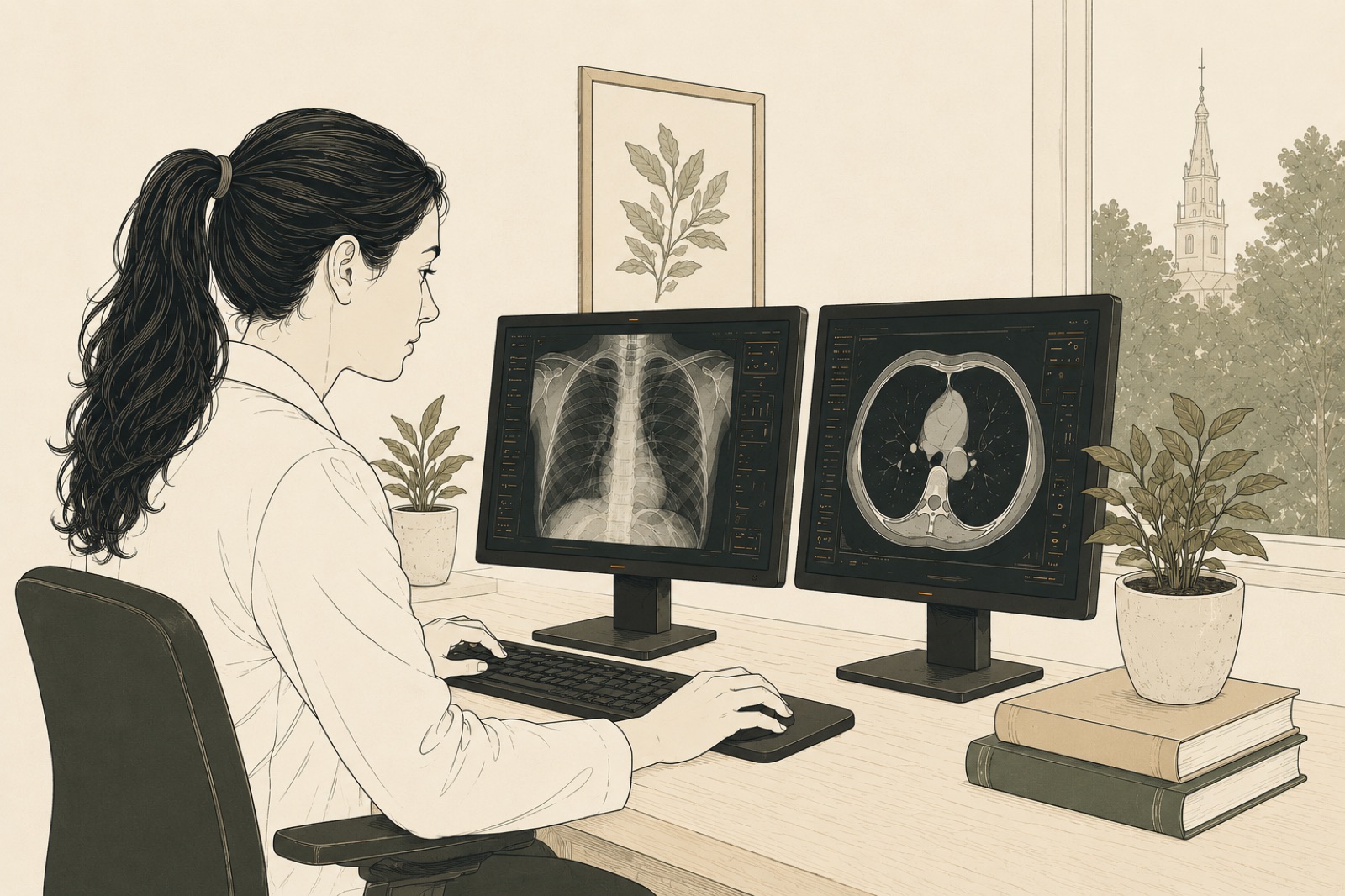
For years, artificial intelligence in medicine was a laboratory promise: promising prototypes, optimistic headlines and few applications that truly reached the clinic. That has changed. In 2026, AI is embedded in hospitals, pharmacies and research centres, and it takes part in decisions that directly affect the health of millions of people.
What is interesting is that much of this revolution is invisible to the patient. It works in the background, inside a scanner, an app or a manufacturing process. Here we explain, without jargon, ten concrete ways artificial intelligence is already changing your health.
01 It detects diseases in medical images before the human eye
Image-based diagnosis is the field where AI has shown the most maturity. Algorithms analyse X-rays, MRIs and mammograms, spotting tiny patterns, a nodule, an early lesion, that can go unnoticed in a quick review. They do not replace the radiologist: they serve as a second read, reducing errors and speeding up the diagnosis of diseases such as cancer or retinal conditions.
02 It accelerates the discovery of new medicines
Designing a drug has traditionally taken between 10 and 20 years. AI is compressing that early phase: instead of testing thousands of molecules in the lab, the models predict which are most likely to work against a specific disease. Large pharmaceutical companies already partner with specialised startups to design "de novo" molecules, that is, created from scratch by algorithms.
03 It predicts who is most at risk of getting ill
By cross-referencing clinical records, genetic data and lifestyle, artificial intelligence can estimate the risk that a person will develop diabetes, cardiovascular problems or certain types of cancer. This opens the door to preventive medicine: acting before symptoms appear, instead of treating the disease once it is already advanced.
04 It personalises treatment for each patient
We don't all respond the same way to the same medicine. AI analyses each person's specific characteristics, genetics, biomarkers, prior response to other drugs, to suggest the treatment most likely to work. This is what's known as precision medicine, especially useful in oncology, where choosing the right therapy from the start can make the difference.
05 It supports doctors in diagnosis
AI-based assistants can review the medical literature in seconds, cross-check symptoms against thousands of cases and suggest possible diagnoses. They do not decide for the doctor, but they offer a broader, faster view, especially valuable in rare diseases or complex presentations where time counts.
06 It makes clinical trials safer and faster
Before a medicine is approved it has to be tested in people, a long and costly process. Artificial intelligence helps design better trials: it identifies the right patients, predicts adverse effects and detects earlier whether a treatment is not working. The result is shorter, safer studies that are less likely to fail in the final stages.
07 It monitors drug safety once on the market
When a medicine is already on sale, its possible side effects still have to be tracked. AI scans medical reports, social networks and databases to detect early signals of problems that would otherwise take months to surface. It is a quiet but crucial layer of safety for public health.
08 It optimises drug manufacturing
Pharmaceutical production is heavily regulated and any deviation can ruin an entire batch. Here AI controls processes in real time, predicts failures before they happen and guarantees traceability and quality. For the patient, this translates into more reliable medicines and fewer shortages.
09 It brings health to your wrist and your phone
Smartwatches and health apps use AI to interpret your heart rate, your sleep or your physical activity, and to alert you to possible anomalies. Some devices already detect arrhythmias or falls. They don't replace the doctor, but they bring continuous monitoring into daily life and encourage healthier habits.
10 It detects early signals the body barely hints at
One of the most promising frontiers is what are called digital biomarkers: tiny clues in the voice, movement or behaviour that AI can interpret to detect diseases at very early stages, even before obvious symptoms appear. In areas such as cognitive decline, this early detection could completely change the prognosis for millions of people.
2026: the year AI really sits its exam
Everything above paints an optimistic picture, but it's worth being honest: accelerating the discovery of a drug is not the same as curing a patient. The great test of artificial intelligence in medicine arrives now, as the first medicines designed with its help enter the decisive clinical phases. Their results will tell us whether AI really improves success rates or whether, for now, it only helps us reach the starting line sooner.
In the meantime, one thing is certain: artificial intelligence is already part of the healthcare system around you. Understanding how it works is the first step to understanding the medicine of the immediate future.
Back to publications